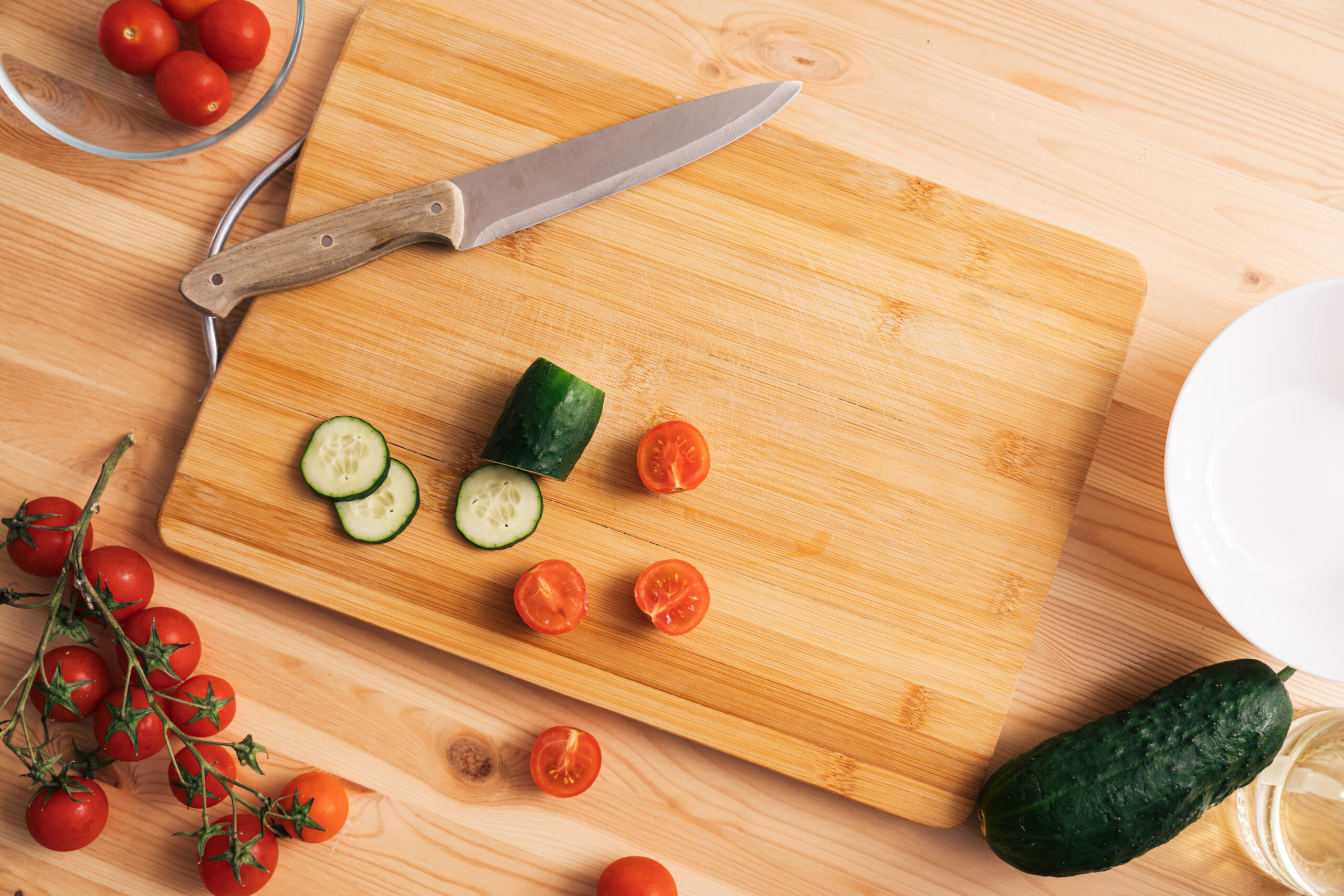
Are bamboo chopping boards good, or just a pretty alternative to plastic? The short answer is yes, a bamboo chopping board is a solid everyday choice for most UK kitchens, as long as you know its quirks and look after it properly.
Bamboo boards are light, hard-wearing and easy on the eye, which is why so many of us end up with one. But they’re not perfect. They can be tougher on your knives than some woods, they hate the dishwasher, and the quality varies a lot from board to board.
Here’s our honest take on the pros and cons, how bamboo compares with plastic and wood, and what to look for when you choose one.
How a bamboo chopping board is made
Bamboo is a grass, not a tree, so you can’t carve a chopping board from a single piece like you would with oak. Instead, the stalks are split into strips, flattened, dried and then glued and pressed together into a solid board. Most bamboo boards are made from moso bamboo, a large, fast-growing species that’s widely used for homeware.
You’ll usually see one of a few styles:
- Natural bamboo: the pale, honey-coloured board most people picture.
- Carbonised bamboo: heat-treated to give a darker, caramel colour. Carbonised bamboo looks lovely and hides stains well, but the process can make the board slightly softer than natural bamboo.
- Edge grain or end grain: edge grain boards show the long sides of the strips; end grain boards show the ends and tend to be thicker and heavier.
Because bamboo boards are glued together, the quality of that glue and the pressing matters. A well-made board feels dense and solid with tight joins. A cheap one may start to split along the seams after a few months of washing.
The pros of bamboo chopping boards
Hard-wearing and less prone to deep scoring
Bamboo is very hard and dense, so the surface tends to pick up fewer deep knife grooves than a soft plastic board. Fewer deep cuts means fewer places for food bits to get trapped, which makes the board easier to keep clean.
Light and easy to handle
Compared with a thick hardwood board, a bamboo board of a similar size is usually lighter. That makes it easier to lift, carry to the sink and tip chopped veg straight into the pan.
Low water absorption
Bamboo’s dense structure means it doesn’t soak up water as readily as many softer woods, as long as it’s sealed with oil and not left sitting wet. That helps it resist warping and staining.
A more sustainable material
Bamboo grows quickly and regrows from its roots after harvesting. That said, “eco-friendly” depends on how it’s farmed, processed and shipped, plus the adhesives used. Look for listings that mention responsible sourcing such as FSC certification. Our guide on why bamboo is eco-friendly goes into the bigger picture.
Looks good on the side
A bamboo board doubles as a serving board for cheese, bread or a Sunday brunch spread.
The cons: what are the disadvantages of a bamboo cutting board?
- Harder on knives. Bamboo is less forgiving on your knife edge than softer woods like maple or walnut, so you may need to sharpen a little more often.
- Not dishwasher safe. The heat and long soak of a dishwasher can loosen the glue and cause cracking or warping. Hand wash only.
- Needs oiling. Bamboo dries out over time and benefits from a regular coat of food-safe mineral oil.
- Can split if neglected. Leaving it soaking in the washing-up bowl is the quickest way to ruin it.
- Quality varies. Cheaper boards can have weaker joins or a rough finish.
Bamboo vs plastic and wood chopping boards
| Bamboo | Plastic | Hardwood (e.g. oak, acacia) | |
|---|---|---|---|
| Knife friendliness | Fairly hard on knives | Kind to knives | Generally kinder than bamboo |
| Deep scoring | Resists well | Scores easily | Moderate, can be sanded |
| Dishwasher | No | Usually yes | No |
| Weight | Light | Light | Often heavy |
| Upkeep | Hand wash, oil regularly | Replace when badly scored | Hand wash, oil regularly |
Plastic boards can go in the dishwasher, which is why many professional kitchens use colour-coded plastic boards to keep raw meat and other foods apart. At home, a sensible approach is to have more than one board: a bamboo board for bread, fruit and veg, and a separate board for raw meat and fish.
Acacia boards are a popular wooden alternative. They’re often a little gentler on knives and have a richer grain, but tend to be heavier than a similarly sized bamboo board.
Are bamboo chopping boards safe and hygienic?
Yes, when used and cleaned properly. The key to a hygienic chopping board isn’t really the material. It’s how you use and wash it.
- Use separate boards for raw meat and ready-to-eat food, or wash the board thoroughly in hot, soapy water between uses.
- Wash straight after use, rinse and dry it standing upright so air can get to both sides.
- Replace any board that’s deeply cracked or split, whatever it’s made from.
You’ll sometimes see bamboo described as naturally antibacterial. We’d treat that with caution, as it doesn’t replace proper cleaning.
How to choose a bamboo chopping board
- Size. A medium board suits everyday chopping. If you cook a lot or carve roasts, a large bamboo board gives you room to work. Smaller kitchens may suit a compact board or a bamboo set of two or three.
- Thickness. Thicker boards feel sturdier and are less likely to warp.
- Juice groove. A channel around the edge catches juices from meat, fruit and tomatoes.
- Grip. Rubber feet or a non-slip base stop the board sliding about. A damp tea towel underneath works too.
- Handles or holes. Useful for lifting and hanging the board up to dry.
- Finish. Look for a smooth, well-sanded surface with tight, even joins. A pre-oiled board is ready to use straight out of the box.
Here’s a selection of bamboo chopping boards and serving trays to compare.
-
Serving Tray Set – Bamboo Wooden Trays for Food, Tea, Coffee, Drinks & More – 1 Large Wooden Tray & 2 Small Bamboo Trays – by LARHN
Original price was: £19.90.£16.90Current price is: £16.90. -

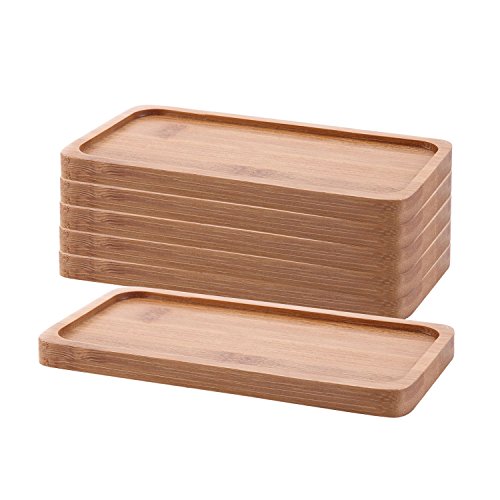
T4U 17CM bamboo Rectangle Bamboo Tray Sandy beige Set of 6
£9.99 -

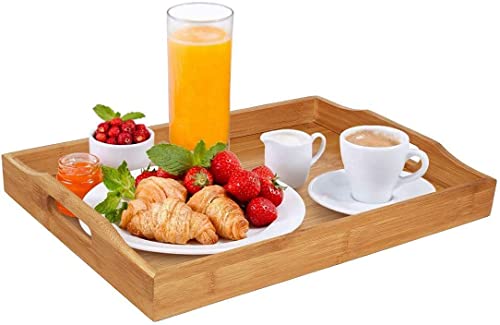
Dudoplatz Bamboo Serving Tray with Handles, Serving Tray Ideas for Dinner, Tea, Bar, Table, Breakfast Tray, Good for Parties or Bed Tray (40 x 30 x 3 cm)
£13.98 -
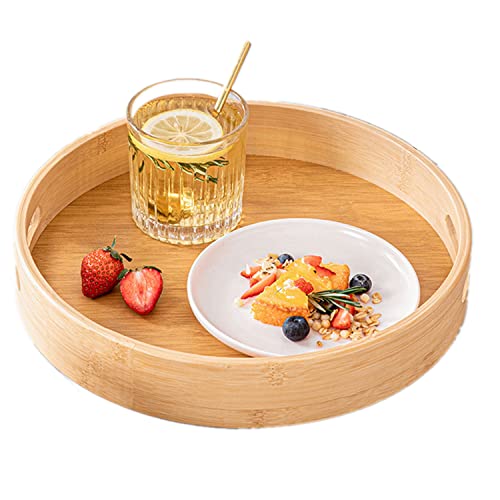
Dudoplatz Bamboo Serving Tray, Round Wooden Tray with Handles and Raised Edge, Serving Plate for Food, Coffee, Wine, Coffee, Tea, Fruit, Meals (30 x 30 x 5 cm)
Original price was: £13.40.£12.66Current price is: £12.66.
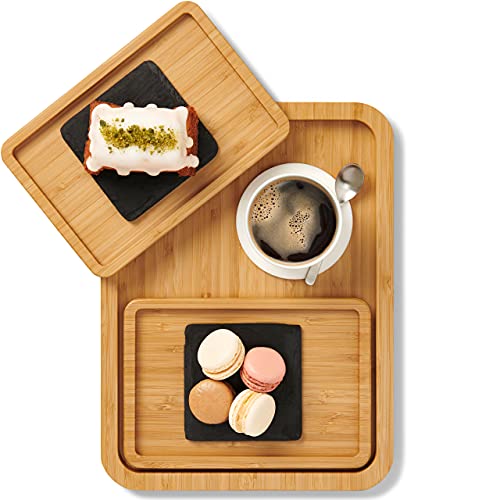
You can see more options on our bamboo chopping board page, and if you like the idea of a board that doubles up for serving, take a look at our bamboo trays too.
How to care for your bamboo board
- Wash by hand. Use hot, soapy water and a brush or sponge. Don’t leave it soaking.
- Dry upright. Wipe it down and stand it on its edge so both sides dry evenly.
- Oil it regularly. Rub in a thin layer of food-safe mineral oil when the board starts to look pale or dry. For a new board, a few coats in the first week helps. After that, once a month or so is plenty.
- Freshen it up. For smells or light stains, scrub with coarse salt and half a lemon, then rinse, dry and oil.
Our guide to caring for bamboo products at home covers more tips, and you’ll find more ideas in our bamboo kitchen section.
Frequently asked questions
Is it okay to cut meat on a bamboo cutting board?
Yes, as long as you wash the board thoroughly in hot, soapy water straight after use. Many cooks prefer to keep a separate board just for raw meat and fish to avoid cross-contamination.
How long will a bamboo chopping board last?
A good-quality board that’s hand washed, dried upright and oiled regularly can last several years. Replace it once it cracks deeply or splits along the joins.
What is the healthiest type of chopping board to use?
No material is hygienic on its own. Plastic boards can be washed in a dishwasher, while bamboo and wood rely on thorough hand washing and drying. Using separate boards for raw and ready-to-eat food matters more than the material.
What do professional chefs use as cutting boards?
Many professional kitchens use colour-coded plastic boards because they can be sanitised in commercial dishwashers and make it easy to keep raw meat, fish and veg apart. Plenty of chefs also keep a wooden board for bread and prep at home.
What do Japanese use for cutting boards?
Japanese cooks often favour softer woods such as hinoki cypress, or soft synthetic boards, because they’re gentle on thin, hard Japanese knife edges.
Are bamboo cutting boards bad for knives?
They’re harder on knives than softer woods like maple, so blades may dull a little faster. Regular honing and the occasional sharpen will keep your knives in good shape.